

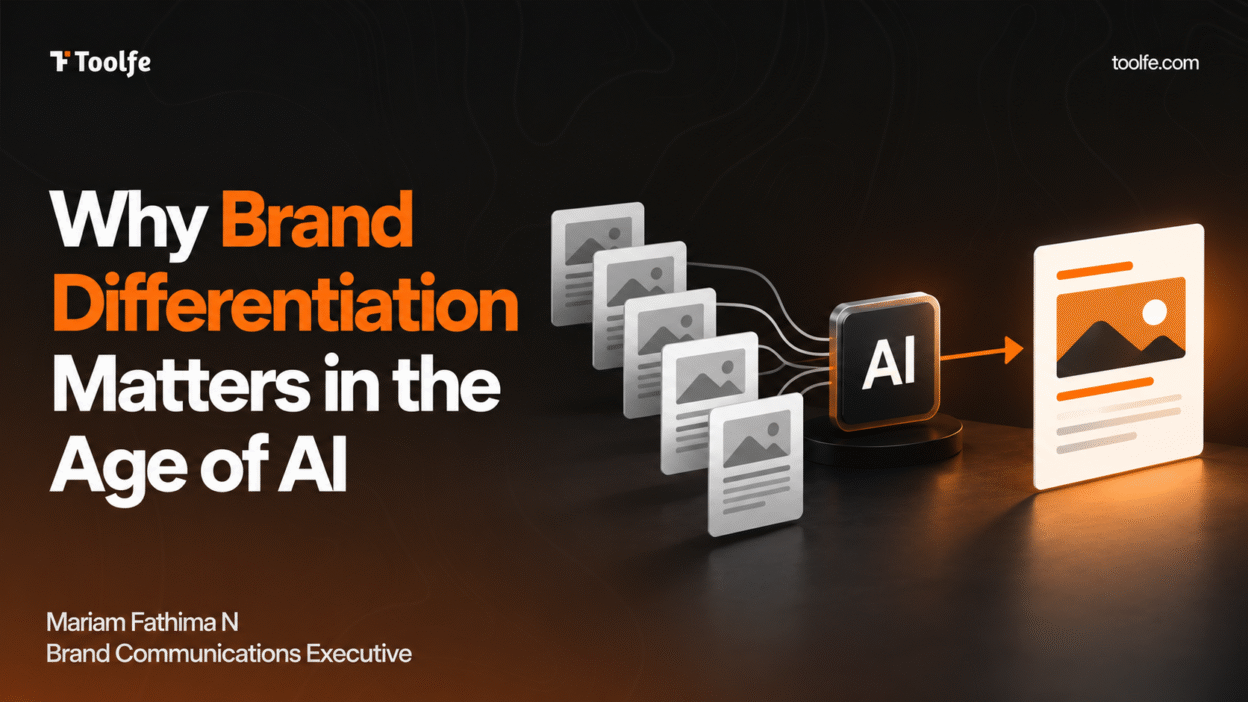
You can now create a social post, campaign idea, image, or first draft in minutes. And so can your competitors.
That changes the question for brands. Having access to AI is no longer enough to create an advantage. As these tools become more accessible, the focus shifts to what your brand brings to the process.
What makes the result recognisably yours?
The Challenge of Creating More Content
AI has removed much of the friction from content creation. Ideas can be explored quickly. First drafts take less time.
A single message can be adapted for different audiences and channels. Teams can experiment with more possibilities without rebuilding everything from scratch.
But easier creation also makes it easier to produce content that feels interchangeable. A polished LinkedIn post can sound like hundreds of others. A website can use all the right language and still leave little behind for the audience to remember.

The problem is not that AI cannot create good content. It can. The challenge is creating something that feels like it could only have come from your brand.
What Your Brand Brings to AI
A brand has years of knowledge that may never appear in a prompt.
It knows the questions customers repeatedly ask. It understands where they struggle. It has project stories, lessons from failures, conversations with customers, and industry experience.
That knowledge affects how the brand sees a problem.
Two companies can face the same customer challenge and interpret it differently. One may see a technology issue. Another may see an operational problem. A third may notice a gap in decision-making. Those observations shape the ideas that follow.
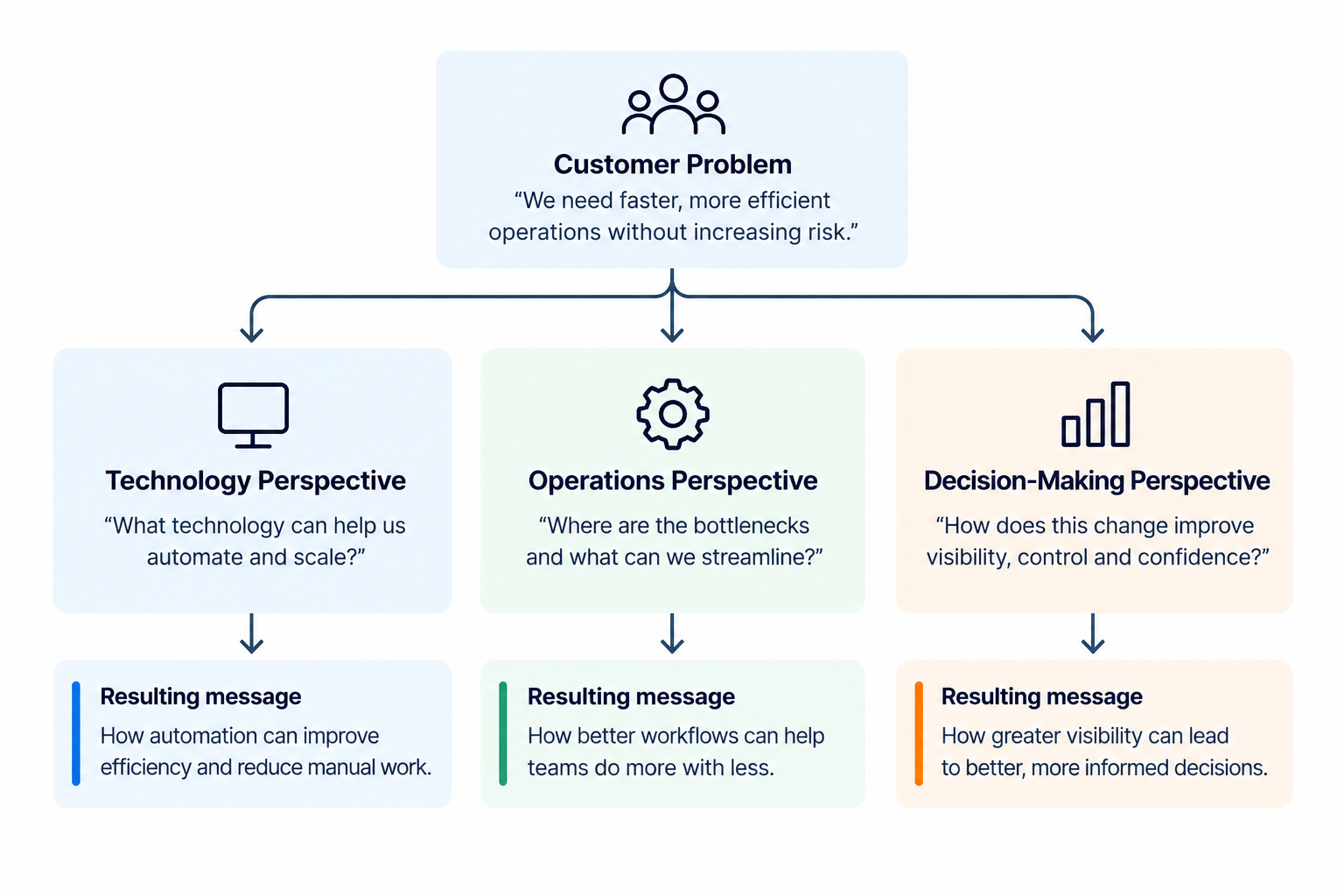
This is why asking AI to “make this more engaging” does not necessarily create stronger brand communication. You need to be clear about what makes the message relevant to your audience. Without it, you may get a polished response, but not necessarily one that feels connected to your brand.
Reworking the Creative Workflow

Creating more distinctive content may require changing the workflow, not just changing the prompt.
1. Start with the problem.
Define who you are speaking to, what they care about, and what you have to say that is worth their attention.
2. Give AI the right context.
Bring in customer insights, industry knowledge, research, examples, and brand experience that give the idea a specific direction. This helps AI work with your context rather than generate something generic.
3. Use AI to explore.
Ask it to develop different angles, challenge assumptions, identify gaps, or show alternative ways to approach the idea.
4. Make the choice yourself.
Decide which direction is relevant, useful, and true to the brand. AI can produce options, but it should not determine your point of view.
5. Make the idea yours.
Take the strongest direction and add the perspective, observations, examples, or point of view that you are willing to stand behind.
6. Use AI to refine.
Once the core idea is clear, use AI to improve structure, simplify language, create variations, or adapt the message across channels.
The result is a different workflow:
Brand context → AI exploration → human judgment → brand input → AI refinement Conclusion
AI can make content creation faster. But when everyone has access to similar tools, your advantage comes from what you see, what you choose to say, and what you add that others cannot easily reproduce.
The technology can help create the message. Your brand has to give it a reason to matter.
FAQ
Does using AI make brand content sound the same?
Not necessarily. AI can produce similar patterns when brands rely on generic prompts, familiar formats, or minimal brand input. The risk of sameness comes from how the technology is used, not simply from using AI itself.