
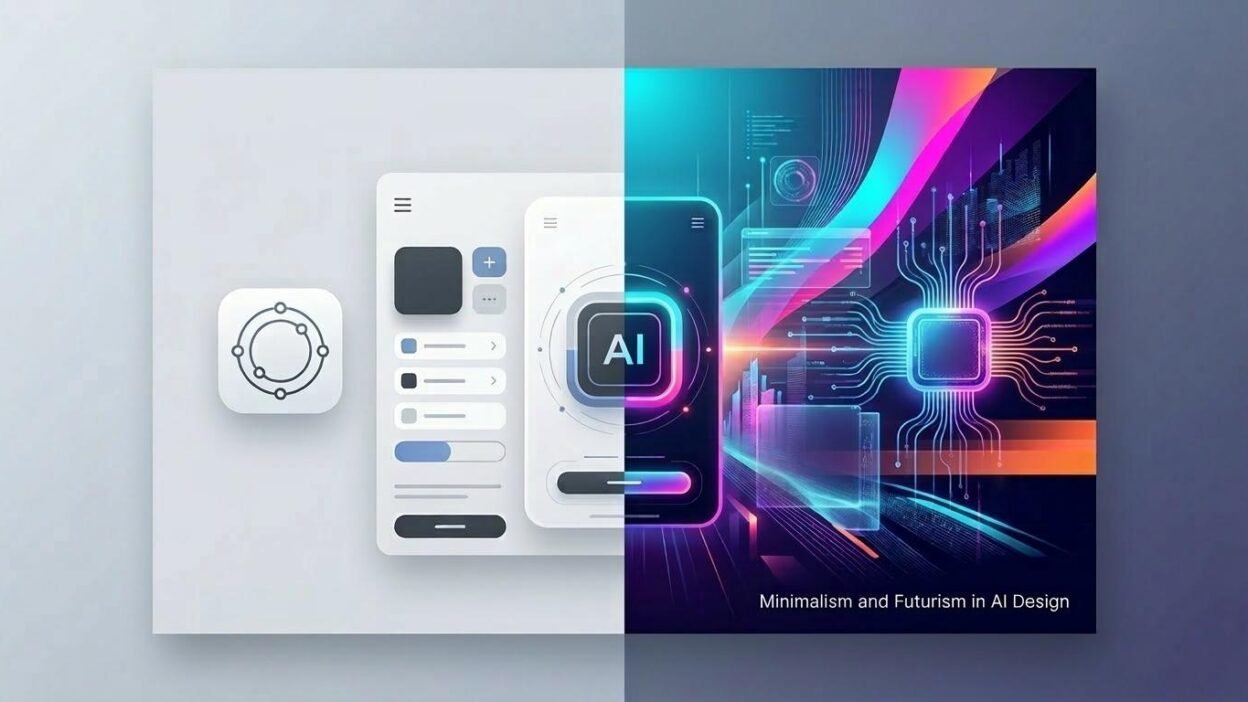
How each approach adds value, and why the best results come from both
Introduction
Designing for AI is not just about how something look. It’s about how it makes people feel when interacting with the technology. Since AI systems are often complex, visual design plays a crucial role in shaping whether users feel comfortable or intimidated.
Two major approaches influence this: minimalism and futurism. Minimalism focuses on simplicity, clarity, and removing unnecessary elements, while futurism emphasizes innovation, advanced visuals, and a forward-looking aesthetic.
Each approach serves a different purpose, and when used thoughtfully, they can significantly improve the overall AI experience.
How Minimalism Helps AI Design
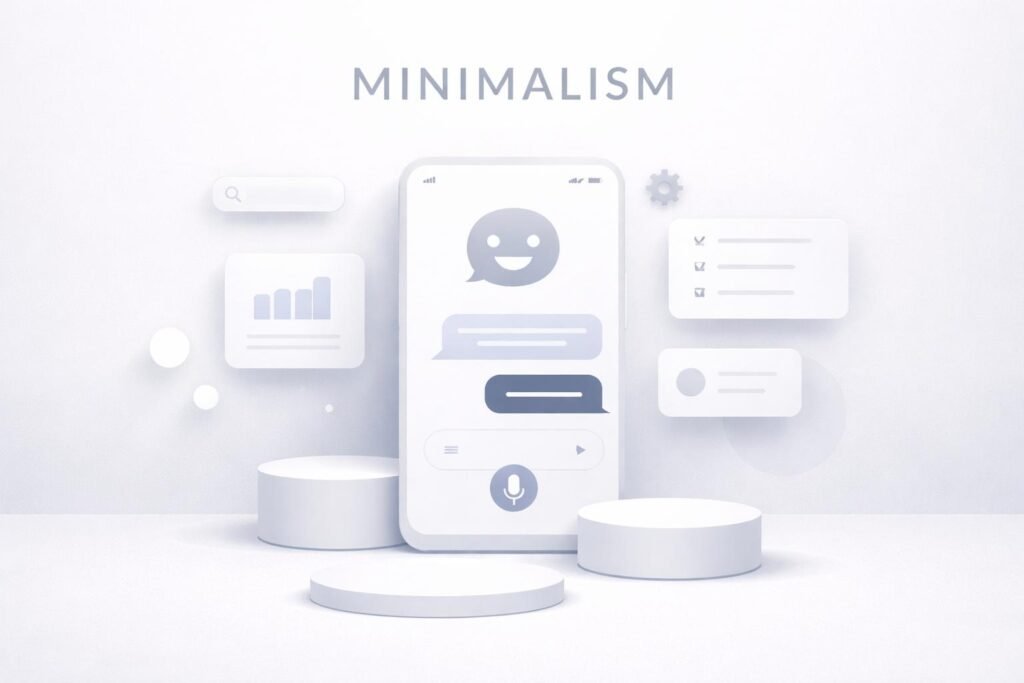
Minimalism brings clarity to complexity. By removing unnecessary elements, it allows users to focus on the core interaction without distraction. In AI products, this is especially important because users are already trying to understand how the system responds and behaves.
A minimal design approach makes the experience feel calm and controlled. It reduces confusion and helps users build confidence while interacting with the system. This is particularly valuable in AI tools designed for everyday users, where ease of use matters more than showcasing technical sophistication.
- Simplifies complex interactions
- Reduces cognitive overload
- Builds trust through clarity
Minimalism makes AI feel accessible, turning advanced technology into something approachable and usable.
How Futurism Helps AI Design
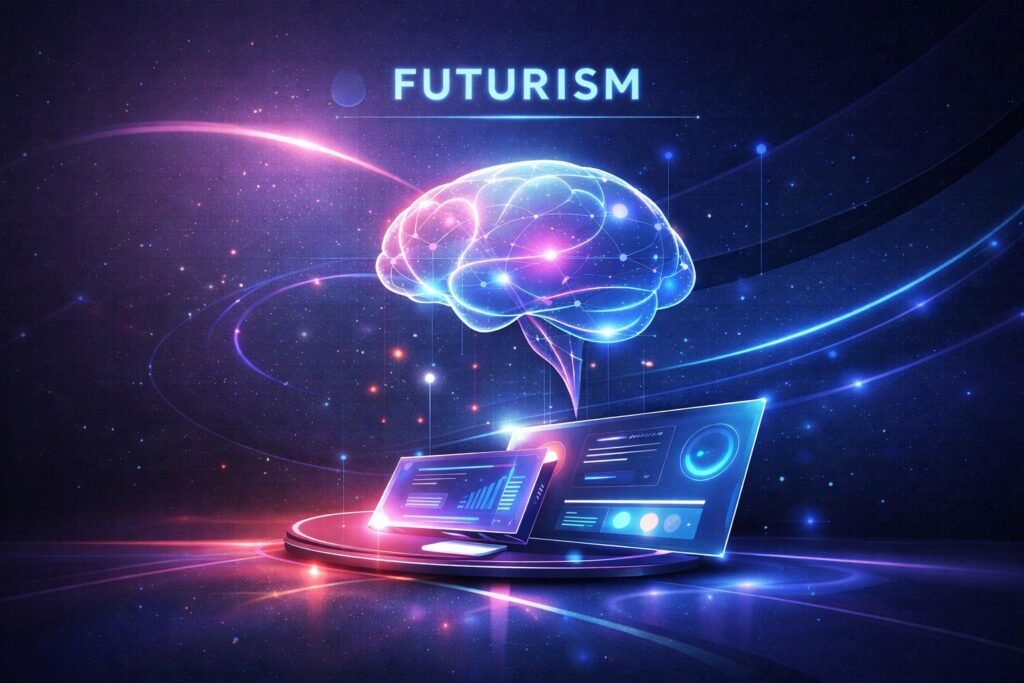
Futurism adds meaning to the experience by visually communicating innovation. While minimalism focuses on usability, futurism focuses on perception. It helps users immediately recognize that they are interacting with something intelligent and advanced.
Through dynamic visuals, gradients, and motion, futurist design creates a sense of energy and progress. It captures attention and builds excitement, which is especially useful in competitive markets where first impressions matter.
- Communicates intelligence and innovation
- Strengthens brand identity
- Increases engagement and visual appeal
Futurism makes AI feel powerful and forward-thinking.
How They Work Together
When combined, minimalism and futurism create a balanced experience where usability meets expression. A clean and simple layout ensures that users can navigate easily, while subtle futuristic elements enhance the overall feel of the product.
Instead of overwhelming the interface, futurist elements can be used as accents through motion, color, or feedback, to highlight the intelligence of the system. This keeps the design clear while still feeling modern and advanced.
This balance is what makes an AI product feel both comfortable and impressive at the same time.
Designing with Intent
The key is not choosing one approach over the other, but understanding when to use each. Minimalism works best when clarity and usability are the priority, while futurism is effective when the goal is to communicate innovation and create impact.
Well-designed AI products shift between the two approaches seamlessly, depending on the context of the interaction.
Conclusion
Minimalism and futurism are not opposing styles. They are complementary tools in AI design. One ensures that users can understand and trust the system, while the other helps them experience its intelligence and potential.
When used together, they create AI products that are both intuitive and inspiring.