
A Practical Guide for UX Designers in the AI Era
Introduction
There is a mistake almost every designer makes at least once. Some make it for years before catching it. It is not a Figma error or a color choice. It is simpler and far more costly than that. Problem identification in UX is often harder than designing the solution itself.
Early in most design careers, the instinct is to jump straight into designing. Open a file, sketch screens, and build something that looks good. It feels productive. It looks like progress.
But when the product launches, users do not engage as expected, and metrics do not move.
And after a painful retrospective, the real issue surfaces. The problem was never properly understood.
This is not a junior designer problem. Senior teams, startups, and enterprise product teams make this mistake too.
“A well-defined problem is already half solved.”
Charles Kettering (popularized by Stanford Design School)
Why Problem Identification Is Often Skipped
Most design processes follow five stages: Empathize, Define, Ideate, Prototype, and Test.
In practice, teams often skip from Empathize straight to Ideate or start with a solution that has already been decided.
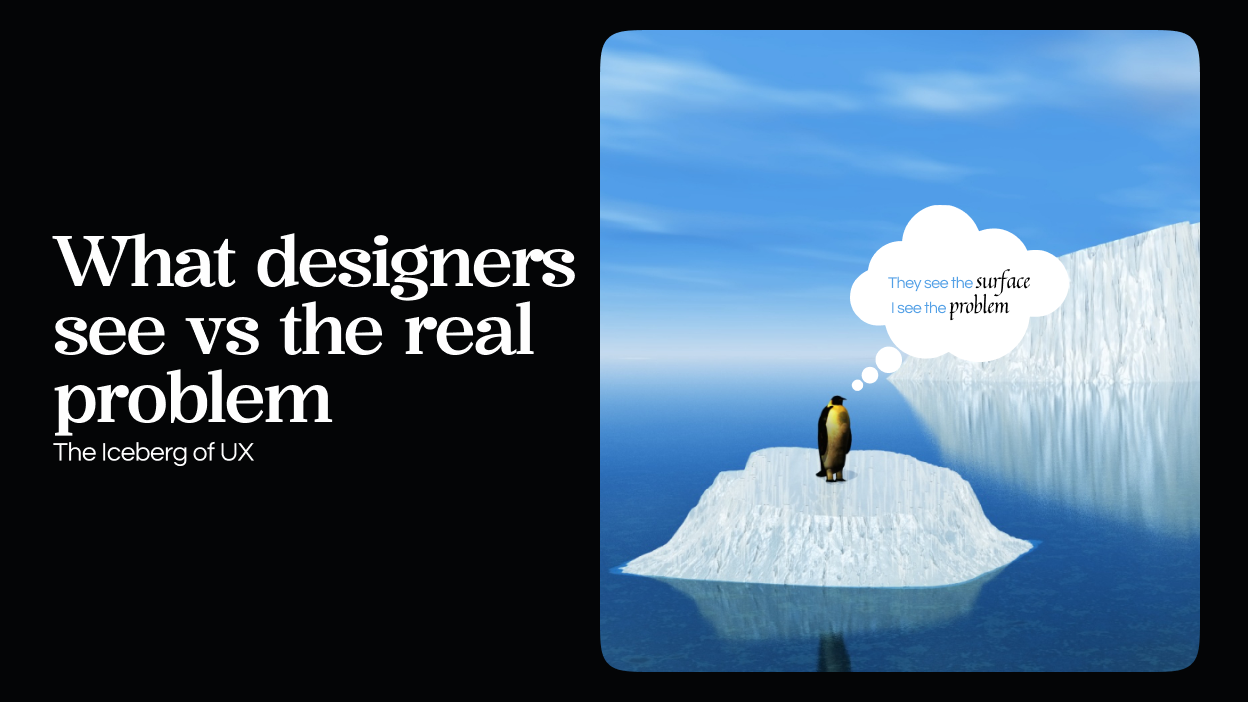
The Define stage is where the actual problem is identified and clearly articulated. It is also the most rushed and underestimated step.
The consequences are predictable:
- Features get built for problems that do not exist
- Redesigns happen without understanding why the original failed
- Teams debate solutions without agreeing on the problem
Many product failures trace back to poor problem definition, not poor execution.
Define the wrong problem, and everything that follows, including flows, visuals, copy, and metrics, is built on a weak foundation. The output may look good, but it will not work.
What a Real Design Problem Looks Like
The word problem is often misused. Most requests are not problems. They are solutions.
Not a Problem → Real Problem
- “We need a better UI” → Users abandon checkout at the payment step
- “Let’s redesign the app” → First-time users cannot find the core feature
- “Add more features” → Tasks take 12 steps instead of 4
- “Competitors have dark mode” → Users experience eye strain
A design problem is the gap between what users are trying to do and what they actually experience.
Your job is not to jump in and fix it, but to fully explore that gap.
A Simple 5-Step Framework
1. Start With Users Not Assumptions
- Talk to 3–5 real users
- Ask open-ended questions
- Look for frustrations, workarounds, and drop-offs
Let reality challenge your assumptions.
2. Observe Behavior Not Just Words
Users may say “it’s fine” but behave differently.
Use:
- Analytics
- Heatmaps
- Session recordings
- Usability testing
Trust what users do, not just what they say.
3. Identify Patterns
- 1 user = noise
- 3 users = signal
- 5 users = pattern
Look for repeated issues, confusion points, and drop-offs.
Use tools like FigJam or Miro to group insights.
4. Write a Clear Problem Statement
Format:
[User] struggles to [goal] because [cause], leading to [impact]
Example:
New users struggle to complete checkout because steps are unclear, leading to high drop-offs.
Keep it:
- Specific
- User-focused
- Free of solutions
5. Validate Before Designing
Ask:
- Is this problem frequent?
- Does it matter to users?
- Is the team aligned?
- Can we measure success?
If yes, start designing.
If not, go back to research.
How AI Is Changing Problem Identification in UX
Once the fundamentals are in place, AI can accelerate how teams identify and understand problems.
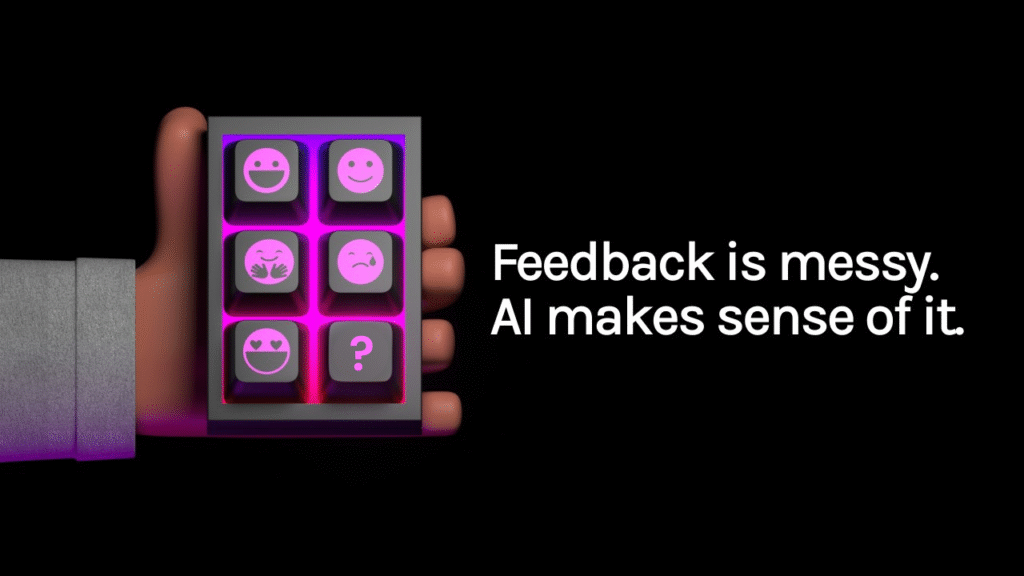
It helps teams analyze large volumes of data and uncover patterns faster.
It can:
- Analyze large volumes of user feedback
- Identify patterns across interviews and reviews
- Detect behavioral anomalies
- Generate draft problem statements
But AI has limits.
AI accelerates analysis. Humans bring context, judgment, and empathy.
The best results come from combining both.
Problem Validation Checklist
Before you design, make sure you have:
- ✓ Talked to real users
- ✓ Observed actual behavior
- ✓ Identified clear patterns
- ✓ Defined a user-focused problem
- ✓ Validated that it is worth solving
If any of these are missing, you are not ready to design.
The Shift That Changes Everything
There are two versions of a design career.
One where you create polished outputs that do not work, because the problem was never clear.
And another where every decision is grounded in a well-defined problem.
The difference is not talent. It is clarity.
The next time a brief arrives, pause before opening Figma.
Ask the question most teams skip: What is the real problem?
Define it clearly. Validate it honestly. Then design.
Conclusion
Stop designing for the problem you assumed.
Start designing for the problem you found.