

Introduction
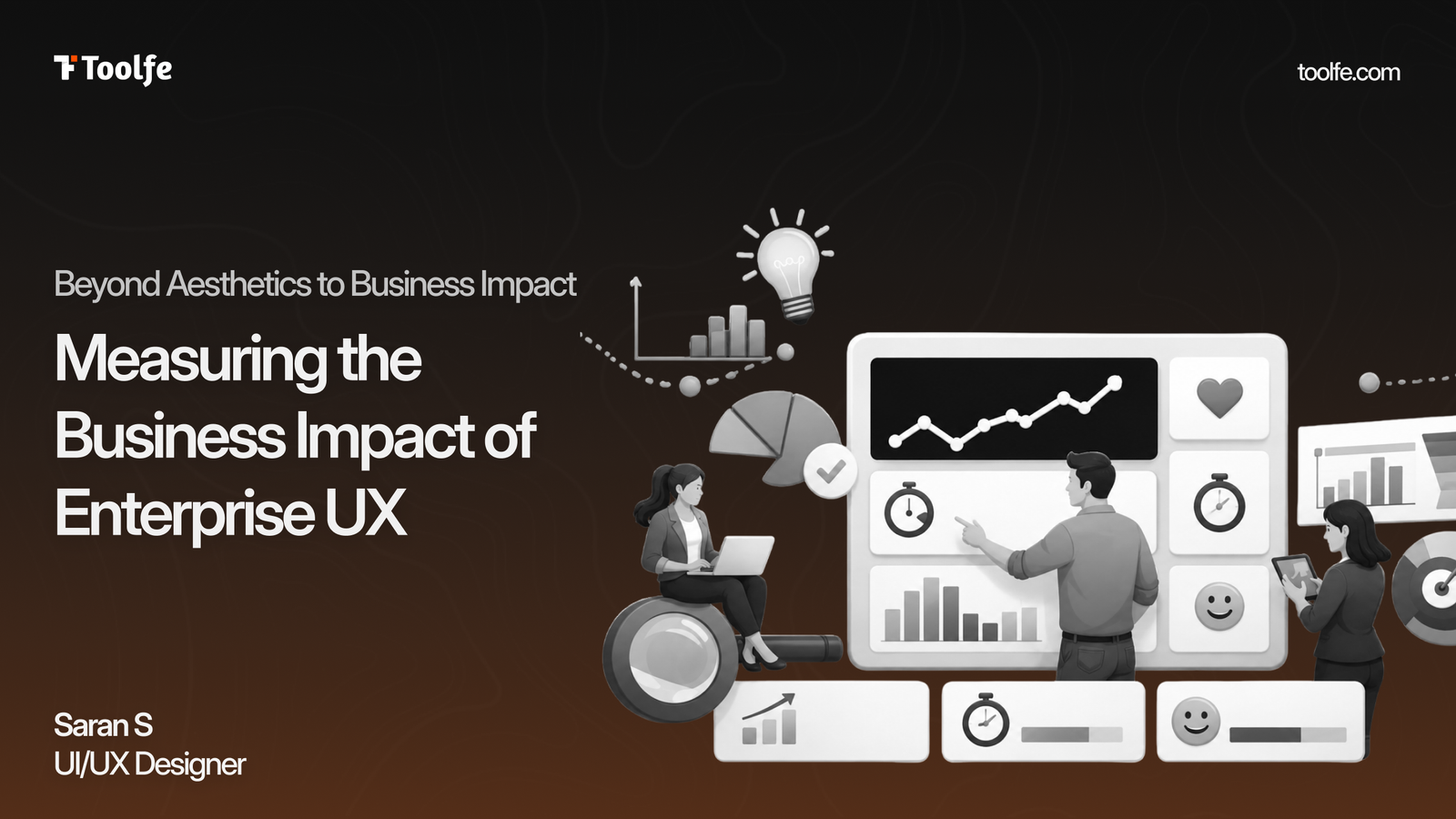
Enterprise UX is measured not by how attractive an interface looks, but by how effectively it helps people get work done.
In enterprise software, a great user experience goes far beyond clean visuals. It determines how efficiently employees can approve requests, process invoices, manage workflows, and complete everyday tasks with confidence.

Why Enterprise UX Is Measured Differently
Unlike consumer applications, enterprise products support business-critical operations every day. A well-designed experience reduces friction, minimizes errors, improves software adoption, and helps organizations achieve measurable business outcomes.
Why UX Metrics Matter
Organizations often judge software by how it looks, but the real measure of UX success is how well it performs.
A strong user experience can lead to:
- Faster task completion
- Higher employee productivity
- Fewer user errors
- Increased software adoption
- Reduced support requests
- Better employee satisfaction
Six UX Metrics Every Enterprise Team Should Track
1. Task Completion Rate
Measure how successfully users complete key workflows such as approvals, document uploads, or purchase requests without assistance.
2. Time on Task
Track how long users take to complete important actions. Reducing completion time improves overall operational efficiency.
3. Error Rate
Monitor common mistakes like incorrect data entry or failed submissions. Fewer errors mean smoother workflows and lower operational costs.
4. User Adoption
Analyze Daily Active Users (DAU), feature usage, and repeat engagement to understand whether employees are embracing the platform.
5. Support Requests
A decrease in help desk tickets often indicates that users can navigate the product with confidence.
6. User Satisfaction
Collect feedback through surveys, usability testing, and interviews to understand how employees feel about using the product.
Connecting Enterprise UX to Business Outcomes
The most meaningful UX metrics are those connected directly to business performance.
Consider questions such as:
- Are employees completing workflows more quickly?
- Has productivity improved?
- Are support costs decreasing?
- Is software adoption increasing across teams?
- Are business processes becoming more efficient?
When UX contributes to these outcomes, it becomes more than a design discipline. It becomes a strategic investment that supports organizational growth and operational excellence.
Enterprise UX in the Age of AI and Automation

As organizations adopt AI-powered applications and workflow automation, user experience becomes even more important.
Automation should simplify work, not introduce additional complexity.
An effective enterprise interface should help users:
- Understand AI-generated recommendations
- Complete tasks with minimal effort
- Stay informed throughout automated workflows
- Build confidence in intelligent systems
When AI is combined with thoughtful UX design, employees can make faster decisions while maintaining trust in automated processes.
Frequently Asked Questions
How do you measure UX success in enterprise software?
Enterprise UX success is measured using metrics such as task completion rate, time on task, error rate, user adoption, support requests, and user satisfaction. These indicators help organizations evaluate how effectively software improves productivity, usability, and overall business performance.
Closing Thought
By measuring the right UX metrics and aligning them with business goals, organizations can build enterprise products that improve productivity, encourage adoption, and deliver lasting business value.
In today’s AI-driven workplace, great UX is the key to making enterprise software both powerful and easy to use.