

Every great design starts with the fundamentals. Before learning advanced software or AI-powered tools, designers need to understand the principles that make designs clear, functional, and visually effective. As design technology continues to evolve, these fundamentals remain the foundation of effective visual communication.
Graphic design fundamentals form the foundation of effective visual communication, helping designers create clear, purposeful, and engaging designs.
Why Graphic Design Fundamentals Matter
A visually attractive design is not always an effective one.
Good design should communicate a message, guide the viewer’s attention, and make information easy to understand. Strong design fundamentals help designers achieve all three.
The Core Principles of Graphic Design
Every successful design is built on a few essential principles.
Color
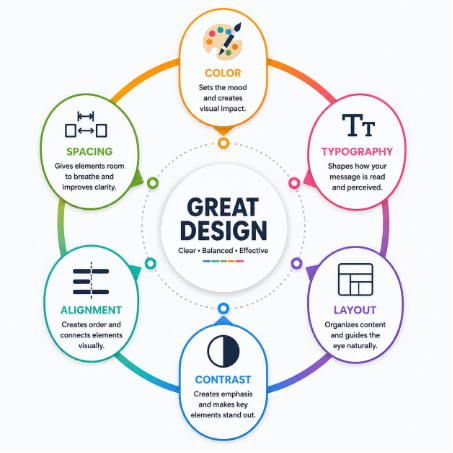
Color does more than make a design attractive. It influences emotion, reinforces brand identity, and helps direct the viewer’s attention. Using a consistent color palette also improves recognition and visual consistency.
Typography
Typography is more than selecting a font. Font size, spacing, hierarchy, and readability all influence how easily people understand the content. Good typography makes information clear and accessible.
Layout
A well-planned layout creates a logical flow of information. It helps organize content, establish visual hierarchy, and naturally guide the viewer through the design.
Contrast
Contrast creates emphasis by using differences in color, size, weight, or shape. It highlights important elements and improves readability, making designs easier to understand.
Alignment and Spacing
Alignment creates structure, while spacing prevents designs from feeling crowded. Together, they improve balance, readability, and the overall visual quality of a design.
Common Mistakes Beginners Make
Many new designers focus on learning software before understanding design principles.
While technical skills are important, effective design comes from knowing when and why to use color, typography, spacing, and layout. This becomes even more important when designing digital products, where user behavior and decision-making shape the overall experience. Software may change over time, but strong design fundamentals remain relevant.
How Do Design Principles Improve User Experience?
Design principles make information easier to understand and navigate. Clear layouts, readable typography, and effective contrast help users find what they need quickly, creating a smoother and more engaging experience.
Closing Thought
Design tools will continue to evolve, but strong fundamentals will always be the foundation of great design.